
PIANO EDUCATION INSIGHTS
Great pianists are not shaped by practice alone. They are formed through thoughtful teaching, artistic imagination, disciplined listening, and a lifelong pursuit of musical excellence.
Explore Josephine Koh's perspectives on piano performance, pedagogy, musical development and artistic interpretation, drawn from decades of international performance and teaching.
These articles, accompanied by selected video commentaries and demonstrations, offer practical insights for students, parents, teachers, and musicians seeking a deeper understanding of piano playing and musical artistry.
EXPLORE THE ARTICLES BELOW

Music Elective Programme (MEP): Why Serious Students Need The Right Piano Coach
For musically ambitious MEP students, successful musical development requires more than conventional piano lessons. Drawing on years of experience teaching Singapore MEP students, Josephine Koh explores how music theory, history, analysis and diploma-level piano performance studies are integrated to develop accomplished young musicians.
The holistic training at Josephine Koh Piano Academy supports long-term artistic growth, preparing students for advanced/diploma musical studies, junior college, polytechnic and university-level music education.

ARSM, LRSM & above Piano Diploma Coaching: From Note Accuracy to Performance Artistry
Advanced and diploma piano performance requires more than technical accuracy. Discover why technical accuracy alone is insufficient—and how specialist coaching develops interpretation, musical maturity and performance confidence. Effective coaching crafts musical understanding, stylistic awareness, interpretive maturity, memory security and the ability to perform with confidence and artistic command.

How to Achieve Distinction in Grade 8 Piano
Achieving Distinction at Grade 8 requires far more than accurate notes. Technical security, stylistic understanding, musical communication and the ability to perform consistently under pressure must all come together convincingly.

Diploma Piano Lessons in Singapore: What serious students Really Need
Diploma-level piano study requires more than learning increasingly difficult repertoire. Students need structured technical development, musical understanding and purposeful performance preparation as they progress towards advanced qualifications and public performance.

Piano Lessons for Gifted Children: How Talent is Trained
A child may memorise quickly, hear harmonies instinctively, or play with striking musical imagination far beyond age expectations. These are promising signs, but they are not a substitute for disciplined training. In fact, gifted students often require more exacting instruction. Giftedness at the piano is often misunderstood. A child may memorise quickly, hear harmonies instinctively, or play with striking musical imagination far beyond age expectations. These are promising signs, but they are not a substitute for disciplined training. In fact, gifted students often require more exacting instruction. Without strong guidance, natural facility can conceal weak reading skills, undeveloped technique, poor physical habits, and shallow musical or theoretical understanding.

How to Prepare for ABRSM Live Exams
A polished ABRSM LIVE exam result goes far beyond playing pieces from beginning to end. In the months leading up to the exam, lessons shape how scales are built, how repertoire is learned, how listening is trained, and how a student performs under scrutiny—long before the examiner hears a single note.
For serious students, the exam is not a box to check. It is a formal assessment of technical command, stylistic understanding, musical maturity, and reliability under pressure. Teachers and students who aim for distinctions, diploma progression, or competitive auditions require a preparation process that is structured, exacting, and artistically informed.

Grades 6 to 8 Music Theory, Why You Need It
Why Theory Matters Beyond Grade 5
For students progressing into Grades 6 to 8, theory becomes far more than written work. It directly influences:
How music is read and understood
How phrases are shaped and balanced
How harmony is perceived
How securely music is memorised
Without this foundation, performance often lacks depth and clarity, even if the notes are correct. Students learn how chords are written and how they function, why a cadence changes the emotional weight of a phrase, how modulation affects architecture, and how stylistic writing differs across periods. This kind of training supports not only written papers but also performance maturity.

How to Prepare for ARSM Diploma Exam
For the ARSM examination, many post-Grade 8 pianists soon discover that the exam requires a sustained recital of approximately 30 minutes, demonstrating artistic authority and a level of control developed over a carefully planned period of time. It is not simply about assembling a number of pieces to fit the duration.
If you are wondering how ARSM preparation differs from graded piano exams, the answer lies not in quantity of practice, but in the curation and preparation of a programme at a higher technical and musical level, with clear artistic purpose.

Recorded or Live Exams: Which is Right for the Students?
Students often underestimate how demanding recording can be.
Good recording preparation begins much earlier than the filming day. Repertoire must be stable enough to survive repetition without becoming mechanical. Memory must be secured. Tempo choices must be realistic. Endings and transitions need special attention to avoid unexpected collapse.
About Josephine Koh
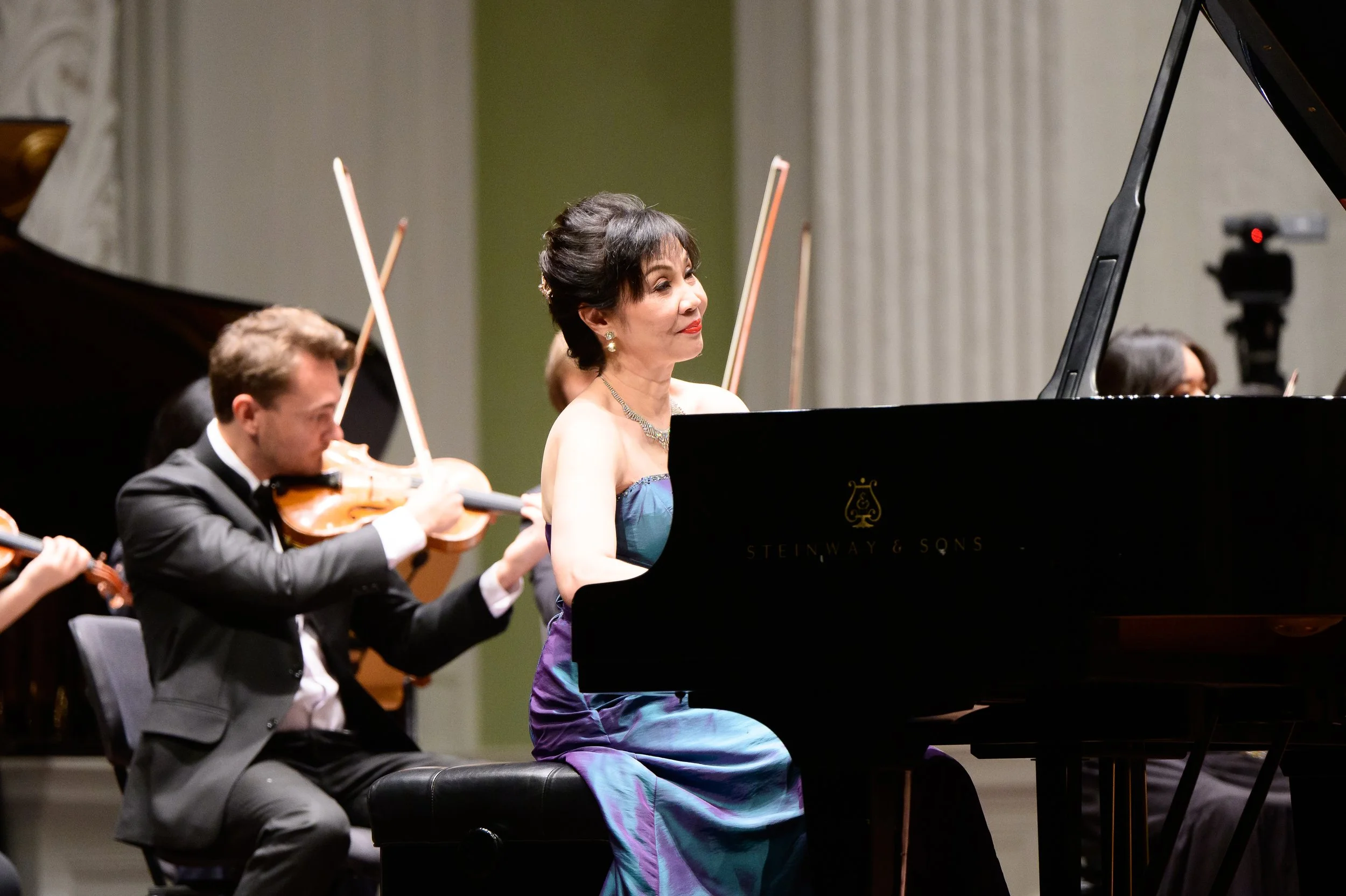
Josephine Koh is a Singapore-based concert pianist, conductor, music author, and pedagogue. As a Bösendorfer Artist and founder of the Josephine Koh Piano Academy and Joyeux Music Pedagogy Academy, she has devoted her career to nurturing pianists and teachers towards distinction in performance, diploma qualifications, and professional musical development.
Her educational philosophy is founded upon the integration of technical mastery, artistic sensitivity, critical listening, and musical integrity, enabling students not merely to pass examinations, but to become confident, expressive, and intellectually engaged musicians.
"The deepest musical growth begins when students learn not simply to practise more, but to listen more deeply, think more critically, and communicate with greater artistic conviction."